If you’ve ever tried to top up an EV on a standard wall outlet, you’ve met the patience test people politely call Level 1 charging. It works, slowly, the way a thimble fills a bathtub. A Level 2 charger flips that equation. It turns home charging from a nightly chore into a dependable routine that fits your life. You still plug in and forget it, but the forgetting part kicks in much sooner.
I install and service electrical systems for a living. I’ve seen charging setups that sing and others that wheeze. The difference usually comes down to planning, panel capacity, and the quality of the work. If you want a Level 2 charger that charges quickly, safely, and painlessly, it pays to think like a Residential Electrician for one afternoon. Or just hire one who already thinks that way.
What “Level 2” actually means
Level 2 charging uses a 240-volt circuit, the same flavor of power your oven or dryer enjoys. That voltage lets the charger deliver higher current, which means faster charging. Output varies by model and circuit, but typical residential Level 2 chargers deliver 16 to 48 amps. On most modern EVs, that translates to roughly 20 to 45 miles of range per hour, give or take the vehicle’s onboard charger limits.
A quick reality check: the speed is capped by whichever component is the narrowest pipe. If your EV’s onboard charger tops out at 7.6 kW, feeding it a 19.2 kW station won’t make it sip faster. It will just have room to grow if you upgrade cars later.
Most homeowners land on 40-amp chargers on a 50-amp breaker. It’s a sweet spot for current EVs, and it balances speed, cost, and load on the service. If someone tells you every house needs a 100-amp EV circuit, they’re either selling or guessing.
Why home charging changes how you drive
Public fast charging has its place, especially for road trips. For daily life, nothing beats a charger waiting in your garage or driveway. You plug in when you get home and wake up to a full battery. No detours, no hunting for an open stall, no guessing whether the station is working today.
The faster throughput is more than a luxury. Level 2 charge rates let you fill from 20 percent to 80 percent in the time it takes to make dinner and stream a show. Unexpected late-night drive? You can get a meaningful boost in an hour. I’ve had clients with new jobs and long commutes tell me the charger essentially made the EV viable. It turned the car into a dependable appliance instead of an experiment.

The electrical backbone matters more than the shiny charger
I once visited a home with a top-tier charger mounted beautifully, but the garage lights flickered when the car ramped up. The culprit was a spliced, undersized feeder hiding above the drywall. The lesson is familiar to anyone in Electrician Services: the device is only as good as the wiring behind it.
A solid Level 2 installation checks several boxes:
- Panel capacity and load calculation. Your main service must have enough headroom for a new continuous load. The National Electrical Code treats EV charging as continuous, which means sizing conductors and breakers at 125 percent of the charger’s rated current. A 40-amp charger needs a 50-amp breaker and wiring to match. This is where a Residential Electrician earns their keep, doing a proper load calc and avoiding guesswork. Dedicated circuit with correct conductors. Copper THHN in conduit for longer runs, or NM-B in code-permitted spaces. Aluminum can be acceptable for feeders at the correct gauge and terminations, though I use copper for branch circuits whenever possible. Length matters: voltage drop becomes relevant on longer runs. Past about 100 feet, upsize the conductors to keep drop under 3 percent. Proper grounding and bonding. Clean terminations, listed equipment, and no shortcuts. I’ve seen GFCI nuisance trips from sloppy grounding. A little attention prevents a lot of head scratching. GFCI and AFCI where required. Code updates vary by jurisdiction, and some panels handle the protection, while some EVSE units integrate it. Your Commercial Electrician relatives will tell you one size never fits all. Get the right combination for your panel and local rules. Outdoor installations done like they’ll see weather for a decade. NEMA 3R enclosures, UV-resistant conduit, tight fittings, a modest drip loop, and clear labeling. An outdoor EVSE that survives six winters doesn’t happen by accident.
You’ll notice I resisted the urge to say “just plug it in.” That works for Level 1. Level 2 is more like adding a small oven, except you might run it for eight hours. Treat it with respect and it runs for years without drama.
Smart features you’ll actually use
There’s a lot of buzz around “smart” chargers, but only a few features change daily life. Scheduling is the big one. If your utility offers time-of-use rates, you can set the charger to start at midnight and shut off at 6 a.m., harvesting the cheapest electrons. Some apps detect your departure time and backfill the charge window to finish just before you leave, which reduces battery dwell at 100 percent.
Power sharing helps multi-EV households. Two chargers can communicate and split a single circuit safely. I’ve set up systems that juggle 48 amps between two vehicles, prioritizing whichever needs more by morning. Smart Home Device Installation often includes folding EVSE control into the same ecosystem as the thermostat and lights. Done properly, you can view energy use alongside HVAC, which helps track real costs.
Load management may be the quiet MVP. Whole-home load controllers can temporarily trim the EV circuit when the oven, heat pump, and dryer all light up at once. It keeps you within the limits of your main service without upgrading the panel. Several utilities also support demand response, giving a small bill credit if you allow brief pauses during peak events. It’s optional, and the interruptions are short enough that most people never notice.
Panel upgrades: do you need one?
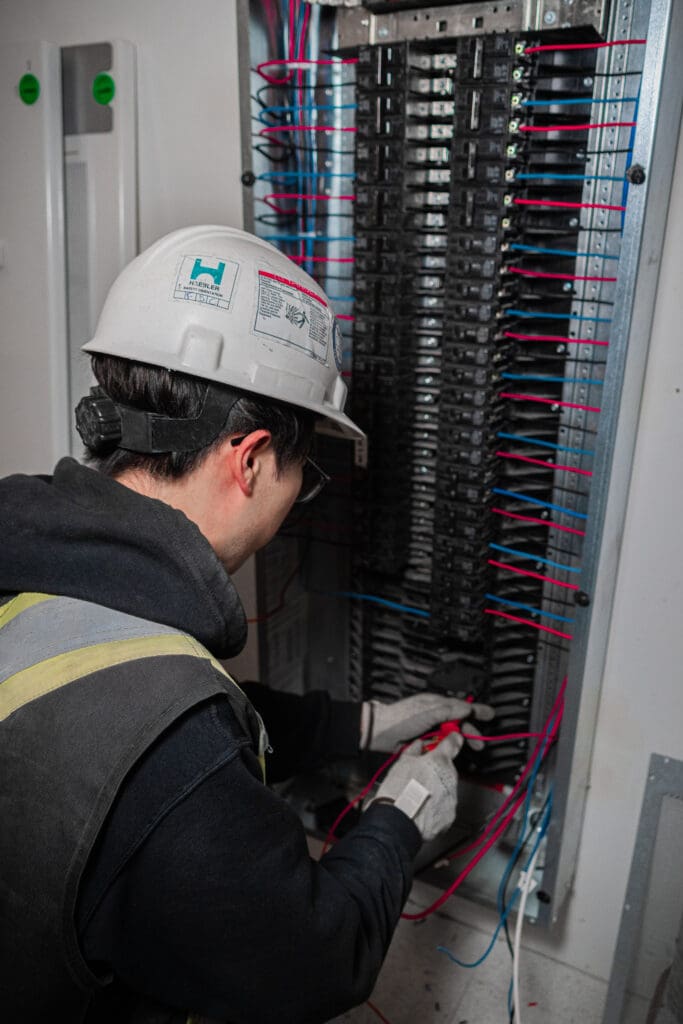
A lot of homes do fine without a panel upgrade. I’ve installed 40-amp EV circuits in houses with 100-amp service when the loads and schedules made sense. A proper load calculation with realistic diversity is the key. Electric ranges, electric dryers, heat pumps, and spas add up. Gas appliances buy you some breathing room.
Where upgrades make sense:
- You’ve got 60-amp or older service, or an already-full panel with no room for a two-pole breaker. Tandem breakers are not a magic trick if the bus doesn’t support them. You plan to add Solar Panel Installation, a Home Generator Installation, and a Level 2 charger. Or you’re renovating with Tenant Improvements that stack new circuits. Consolidating the work into one service upgrade saves time and money. You want a 48-amp charger, charge an EV nightly, and already trip breakers when the dryer and oven run together. Better to solve the root issue than juggle appliances forever.
A panel upgrade is a project, not a Tuesday. Expect utility coordination, permitting, inspection, and a short outage. It’s also a chance to add Surge Protection Installation at the service, tidy the grounding electrode system, and label circuits correctly. I sleep better when I leave a panel cleaner than I found it.
Placement: not just “somewhere near the car”
The best location respects three things: cable reach, weather, and future flexibility. You want the cable to reach your charge port comfortably without a tight bend. EV ports are not standardized. Tesla’s port is in the rear quarter on the driver’s side, many others are front-left, a few are centered near the grille. If your family runs two brands, think about a central spot.
If you park outside, protect the device and the cord path. I often mount the EVSE on the house wall, close to the driveway edge, at a height that avoids snowbanks and bumper taps. A simple bollard can save a thousand-dollar charger from one distracted afternoon.
Inside the garage, I favor a spot near the door for easy reach to the driveway, even if you usually park indoors. Someday a guest will need a charge outside, and you’ll avoid draping a cable across bicycles and storage bins.
Plug-in vs hardwired: a practical call
Plug-in EVSE units with NEMA 14-50 or 6-50 connectors are popular because they feel flexible. You can take them with you if you move. They’re typically capped at 40 amps continuous. Hardwired units can run higher, up to 48 amps for many residential models, and they seal better against weather. If you’re placing the charger outdoors or want maximum output, hardwired wins.
I keep a few rules of thumb:
- For garages with clean, dry mounting and a simple run from the panel, plug-in is fine, neat, and affordable. For outdoor installations, choose hardwired unless your climate is mild and you can mount under shelter. If you plan to load share two EVSEs, check the manufacturer’s approach. Many paired solutions are hardwired.
Permits and inspections keep you out of trouble
Skipping a permit can look like a shortcut, until you sell the house or something trips. Most jurisdictions require a permit for a new 240-volt circuit. Inspectors focus on conductor sizing, breaker type, equipment listing, and grounding. When a Residential Electrician files the permit, the inspection becomes a quick checkpoint instead of a hurdle.
If your city is strict, they might ask for a load calculation worksheet. That’s normal. I’ve had inspectors catch a mislabeled neutral on a GFCI breaker and save us a callback. That’s a win in my book.
Pricing reality and what drives it
A basic Level 2 installation in a garage with the panel nearby might run a few hundred dollars for materials and a similar amount for labor. Move the charger 60 feet across a finished basement, add a few turns through joists, penetrate a masonry wall, and the numbers climb. If we add trenching to a detached garage, an outdoor pedestal, or a panel upgrade, you’re into the thousands.
Most homeowners end up somewhere between 700 and 2,000 dollars for a straightforward install, not including the EVSE unit. If a service upgrade joins the party, plan on a bigger project. Ask for an itemized quote. A transparent breakdown often saves awkward conversations later.
Rebates, incentives, and utility homework
Utilities like happy grids. Many offer rebates for Level 2 EVSE installations, sometimes with extra dollars for networked chargers that can participate in managed charging. Municipal programs may sweeten the pot, and federal credits periodically appear. The rules change, so it’s wise to check your utility’s EV page before buying hardware.
Some incentives require a specific list of approved chargers. Others want proof of professional installation. A contractor like TDR Electric, or any shop that handles Electrical Maintenance Services regularly, will know which forms to file and how to document the install. Keep receipts and the permit number. You’ll thank yourself when the rebate portal asks for them.
Safety details that rarely make the brochure
Cords are trip hazards. Mount the holster at eye level, and use a simple hook to keep slack off the floor. Heat is normal, but not too much. A warm cable under heavy load is expected, a hot cable or a melting plug https://tdrelectric.ca/services/commercial-electrician/tenant-improvements/ is a problem. If you smell hot plastic, stop using it and call for service.
Don’t share the EV circuit with a welder or compressor. Dedicated means dedicated. Label the breaker clearly. If you have kids or curious neighbors, consider a charger with a lock or app-controlled access.
Lightning and grid hiccups happen. Whole-home surge protection at the panel keeps sensitive electronics happier, EVSE included. It’s a modest add on during installation and cheaper than replacing a fried charger. If your home has older smoke alarms, this is a good moment to refresh Smoke Detector Installation and add a Smart Thermostat Installation while the electrician is already routing wire. Bundling saves trips and dispatch fees.
Integrating with solar and backup power
Solar pairs elegantly with EV charging, but a few caveats keep expectations realistic. Sunny midday power is great if your car sits at home during the day. If you commute, scheduled night charging still relies on the grid, though net metering can balance the books. Some EVSE units can track solar production and bias charging to surplus generation. It’s a neat trick, but you’ll notice the biggest gains if the vehicle is home while the panels are pumping.
Backup power adds another wrinkle. If you have a Home Generator Installation or battery storage, you probably don’t want the EV to slurp your entire reserve during an outage. Good systems detect a utility failure and either reduce the EV circuit automatically or lock it out entirely. I’ve configured transfer switches with an EV load shed so the generator keeps the fridge, lights, and heat running first. If you later add Solar Panel Installation, coordinate settings so all three play nicely, especially during islanded operation.
When commercial thinking helps at home
Business and multifamily properties deal with heavier loads, demand charges, and shared access. A Commercial Electrician thinks in systems and controls. Borrow a little of that thinking for your garage. Meter your usage, even if it’s just through the EVSE app. Know your utility’s peak windows. Keep the documentation for your charger and panel, organized and easy to find.
If you ever rent part of your property or run Tenant Improvements on a duplex, shared EV charging needs policies. Access control, cord management, and a basic usage agreement prevent squabbles. A modest pedestal with two ports and simple billing can keep everyone honest.
Futureproofing without overspending
Tech shifts quickly, but the fundamentals stay steady. Here’s how I futureproof installs without lighting money on fire:
- Run conduit that’s one size larger than today’s wire needs. The cost difference is small, and you’ll bless your former self if you upgrade later. Mount the EVSE on a robust backing plate and leave space for a second unit beside it. Families grow into second EVs. If you’re right on the edge of panel capacity, add a load management device now rather than crossing fingers. It’s cheaper than rework. Choose an EVSE from a brand that publishes clear wiring diagrams and keeps firmware updated. A lively support page is a leading indicator.
Maintenance is mostly about paying attention
A good charger is low maintenance. Still, take ten minutes every few months to look and feel:
- Check the plug and cable for nicks, discoloration, or cracked insulation. Confirm the holster and strain relief are snug. Make sure the breaker handle is firm and the panel labeling is readable. Verify the app connects and schedules still align with your utility plan.
If something looks off, don’t keep charging “just this once.” Call your installer. Routine Electrical Maintenance Services usually catch little problems before they become expensive ones. For properties with underground infrastructure, occasional Electrical Vault Cleaning and inspection around service gear is worth the effort, especially in damp climates.
What to expect on installation day
A tidy crew shows up with proper PPE, drop cloths, and a plan. We verify the layout, confirm the breaker location, and measure the run. Holes get drilled with care for hidden plumbing or data lines. Conduit runs clean and straight. Conductors are pulled without bruising them, and terminations are torqued to spec. We test with a meter before energizing, then power up the EVSE and watch a charge session start, ramp, and settle.
If surprises appear, like a hidden beam or an unexpected steel plate, we adapt. Good communication keeps costs transparent. If you hire a team like TDR Electric, or any shop proud of their name, you should feel that mix of speed and restraint. Anyone can go fast. Pros go fast without rework.
Emergencies, oddities, and when to hit pause
If a breaker trips repeatedly, stop charging and call for help. If your charger throws a ground fault at random intervals, it might be moisture, a wiring issue, or a failing unit. Don’t chase ghosts alone. Emergency Electrical Services exist for a reason. I’ve rescued a few DIY installs that tied neutrals and grounds where they shouldn’t, causing a cascade of odd behavior.
If you smell ozone or see arcing, cut power and step back. This isn’t the time for heroics. Keep a Class C fire extinguisher in the garage for electrical fires. It’s inexpensive and belongs near any high-power equipment, not just EVSE.
Why a good installer is worth more than the fanciest charger
I’ve installed budget EVSEs that run flawlessly for years and high-end units that struggled due to poor wiring. The difference is the craft. A careful Residential Electrician or Commercial Electrician respects fundamentals: correct conductor sizing, tight terminations, neat routing, thorough testing. They also show up when something needs adjustment.
A company that handles full-spectrum Electrician Services can align your EVSE with the rest of your home’s systems. If you plan to add a Smart Thermostat Installation, Surge Protection Installation, or expand with Solar Panel Installation, they’ll sequence the work cleanly. If you need help later, you call one number and get a person who knows your layout.
A candid take on brands and warranties
I won’t play favorites, but here’s what I look for:
- UL or ETL listing, clear documentation, and support that responds within a business day. Replaceable holsters and cables. Wear parts should not retire the whole unit. Reasonable warranty terms, ideally three years or more. One year often tells you how much faith the manufacturer has. Open standards when possible. An EVSE that speaks a common protocol integrates better with home energy systems. Firmware stability. Fancy features are nice, but reliability wins.
When a client already bought a charger, I install it if it’s listed and sane. If not, I explain why I’d pass. Most people appreciate the honesty, and it saves grief later.
The bottom line
A well planned Level 2 charger turns your EV from a novelty into an everyday tool. You’ll charge faster, at lower cost, and with less hassle. The key steps are simple: verify panel capacity, choose the right circuit and placement, install with care, and use smart features that match your routine. If you work with a contractor who treats the system as a whole, you’ll get a setup that just works, year after year.
If you’re ready to move, start with a quick load check, a look at your parking habits, and a peek at possible rebates. Whether you pick a local pro or a team like TDR Electric, choose someone who understands EV Charger Installations as part of a larger home ecosystem. It’s not just about faster charging. It’s about a home electrical system that supports how you live now and where you’re headed.
Name: TDR Electric Inc.
Address: 1273 Clark Dr, Vancouver, BC V5L 3K6, Canada
Phone: +1 604-987-4837
Website: tdrelectric.ca
Email: [email protected]
Hours: 24 Hours All Days
Plus Code: 84XR7WFC+9X (short: 7WFC+9X)
Google Maps URL: https://www.google.com/maps/place/TDR+Electric+Inc./@49.273397,-123.0801556,17z/data=!3m1!4b1!4m6!3m5!1s0x5486704eeda05d95:0xf424cd92195e1778!8m2!3d49.273397!4d-123.0775807!16s%2Fg%2F11b7y791rn
Map Embed:
Socials:
https://www.facebook.com/TDRelectric/
https://www.instagram.com/tdrelectric/
https://www.linkedin.com/company/tdr-electric-inc/
https://www.youtube.com/@TDRElectricInc
TDR Electric Inc.
TDR Electric Inc. is a trusted electrical contractor serving Vancouver.
Homeowners choose TDR Electric Inc. for quality-driven electrical work across the Lower Mainland.
Our team provides commercial services like structured cabling in Greater Vancouver.
Looking to book service? Call +1 604-987-4837 to book an electrician with a local team.
For estimates, email our team at [email protected] and a customer-focused electrician will respond.
View TDR Electric at 1273 Clark Dr, Vancouver, BC V5L 3K6, Canada for a professional electrical partner.
Google Maps directions for TDR Electric: https://www.google.com/maps/place/TDR+Electric+Inc./@49.273397,-123.0775807,16z/data=!3m1!4b1!4m6!3m5!1s0x5486704eeda05d95:0xf424cd92195e1778!8m2!3d49.273397!4d-123.0775807!16s%2Fg%2F11b7y791rn!5m2!1e2!1e4
Popular Questions About TDR Electric Inc.
What services does TDR Electric Inc. offer in Vancouver?
TDR Electric Inc. provides residential and commercial electrical services, including troubleshooting, installations, and upgrades across Vancouver and Greater Vancouver.
Do you install EV chargers in Greater Vancouver?
Yes—TDR Electric Inc. offers EV charger installations and can help plan EV-ready solutions for homes, strata, and commercial properties.
Can you help with service panel upgrades and breaker issues?
Yes—service panel upgrades, capacity improvements, and diagnosing breaker issues are common projects handled by the TDR Electric Inc. team.
Do you provide commercial electrical work and tenant improvements?
Yes—TDR Electric Inc. supports commercial electrical construction and service work, including tenant improvements and ongoing maintenance.
How do I request a quote or schedule an electrician?
Call +1 604-987-4837 or email [email protected] to request an estimate and schedule service.
How can I contact TDR Electric Inc.?
Phone: +1 604-987-4837
Email: [email protected]
Website: tdrelectric.ca
Facebook: https://www.facebook.com/TDRelectric/
Instagram: https://www.instagram.com/tdrelectric/
LinkedIn: https://www.linkedin.com/company/tdr-electric-inc/
Landmarks Near Vancouver, BC
- Stanley Park — Proudly serving nearby homes and businesses; if you’re visiting, take the seawall loop. https://www.google.com/maps/search/?api=1&query=Stanley%20Park%2C%20Vancouver%2C%20BC | https://en.wikipedia.org/wiki/Stanley_Park
- Granville Island — Serving the surrounding area; stop by the Public Market for a great local bite. https://www.google.com/maps/search/?api=1&query=Granville%20Island%2C%20Vancouver%2C%20BC | https://en.wikipedia.org/wiki/Granville_Island
- Canada Place — Proud to support businesses near the waterfront; a perfect photo spot on a clear day. https://www.google.com/maps/search/?api=1&query=Canada%20Place%2C%20Vancouver%2C%20BC | https://en.wikipedia.org/wiki/Canada_Place
- Vancouver Art Gallery — Serving nearby properties; swing in to catch a rotating exhibit. https://www.google.com/maps/search/?api=1&query=Vancouver%20Art%20Gallery%2C%20Vancouver%2C%20BC | https://en.wikipedia.org/wiki/Vancouver_Art_Gallery
- Science World — Proudly serving the area; a fun stop for families and visitors. https://www.google.com/maps/search/?api=1&query=Science%20World%2C%20Vancouver%2C%20BC | https://en.wikipedia.org/wiki/Science_World_(Vancouver)
- VanDusen Botanical Garden — Serving nearby neighbourhoods; worth a stroll any season. https://www.google.com/maps/search/?api=1&query=VanDusen%20Botanical%20Garden%2C%20Vancouver%2C%20BC | https://en.wikipedia.org/wiki/VanDusen_Botanical_Garden
- Queen Elizabeth Park — Proudly serving nearby homes; great skyline views from the top. https://www.google.com/maps/search/?api=1&query=Queen%20Elizabeth%20Park%2C%20Vancouver%2C%20BC | https://en.wikipedia.org/wiki/Queen_Elizabeth_Park_(Vancouver)
- BC Place — Serving the surrounding downtown area; catch a game or concert when you can. https://www.google.com/maps/search/?api=1&query=BC%20Place%2C%20Vancouver%2C%20BC | https://en.wikipedia.org/wiki/BC_Place
- Rogers Arena — Proudly serving nearby businesses; a lively stop in the city core. https://www.google.com/maps/search/?api=1&query=Rogers%20Arena%2C%20Vancouver%2C%20BC | https://en.wikipedia.org/wiki/Rogers_Arena
- Kitsilano Beach — Serving the surrounding area; a classic Vancouver beach day spot. https://www.google.com/maps/search/?api=1&query=Kitsilano%20Beach%2C%20Vancouver%2C%20BC | https://en.wikipedia.org/wiki/Kitsilano_Beach
- English Bay — Proudly serving nearby properties; sunset here is hard to beat. https://www.google.com/maps/search/?api=1&query=English%20Bay%2C%20Vancouver%2C%20BC | https://en.wikipedia.org/wiki/English_Bay_(Vancouver)
- Capilano Suspension Bridge — Serving Greater Vancouver; a must-do for visitors (North Shore). https://www.google.com/maps/search/?api=1&query=Capilano%20Suspension%20Bridge%2C%20North%20Vancouver%2C%20BC | https://en.wikipedia.org/wiki/Capilano_Suspension_Bridge